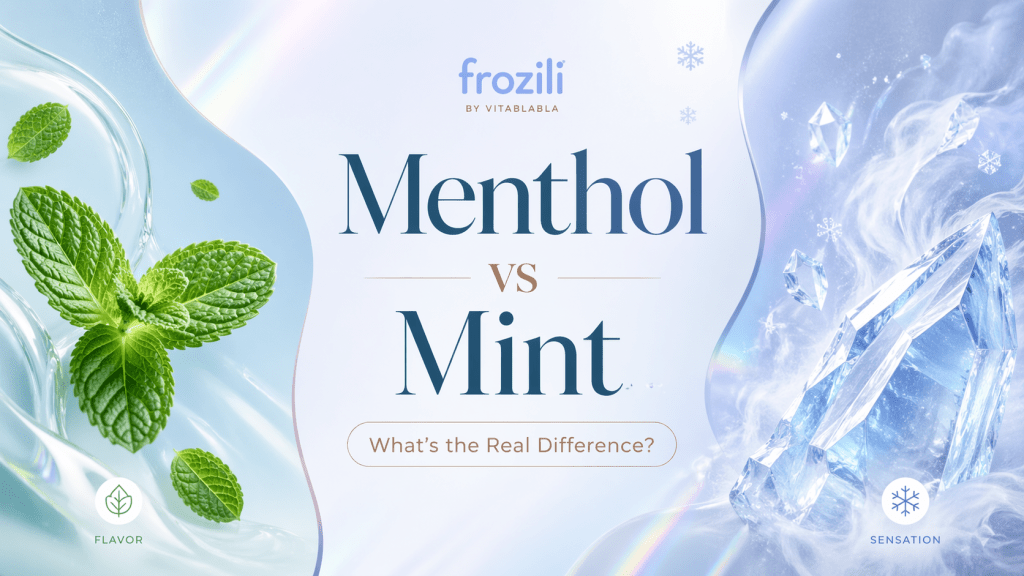
Menthol vs Mint: What’s the Real Difference?
People often use the words mint and menthol as if they mean the same thing. On product packaging, in flavor descriptions, and in everyday conversation, the two are constantly blended together. But they are not actually identical.
Mint is a plant flavor. Menthol is the compound that creates much of the cooling sensation people associate with mint.
That difference matters more than it sounds. Once you understand it, a lot of products start to make more sense — especially candies, mints, throat lozenges, gum, and refreshing snacks that aim to feel crisp and cooling.
In this guide, we’ll break down the real difference between mint and menthol, how each one feels, and why some products focus more on one than the other.
Mint and Menthol Are Related, But Not the Same
The easiest way to think about it is this:
Mint is the broader flavor family.
Menthol is one of the specific compounds that can come from mint and create a cooling sensation.
When people say something tastes “minty,” they may be referring to the overall herbal, fresh, slightly sweet, sometimes green taste that comes from mint leaves or mint-inspired flavoring.
When people say something feels “cooling,” “icy,” or “refreshing,” that sensation is often tied to menthol.
So while mint and menthol often appear together, they contribute different things.
What Mint Actually Is
Mint usually refers to herbs in the mint family, such as peppermint or spearmint. These plants are used in teas, candies, desserts, oral care products, and many other foods.
When a product has a mint flavor, it may be drawing on the leafy, aromatic taste associated with those herbs. Depending on the type of mint used, the flavor can be:
- sweet and soft
- green and herbal
- crisp and bright
- cool and refreshing
But mint is primarily a flavor profile, not just a sensation.
That is why two mint products can taste very different. One may feel like a gentle sweet mint, while another may feel sharp, icy, and intense.
What Menthol Actually Is
Menthol is the ingredient most responsible for the cooling feeling people recognize in many mint products.
It is what creates that cold, airy sensation in the mouth even when the product itself is not physically cold. That cooling effect is why menthol is widely used in products meant to feel refreshing, soothing, or extra crisp.
Menthol is not the same thing as the full taste of mint. On its own, menthol is more about feeling than about giving a complete herbal flavor experience.
That is why a product can have a strong menthol effect without tasting like fresh mint leaves, and a product can taste minty without delivering much cooling intensity.
The Simplest Difference: Flavor vs Sensation
If you only remember one thing, it should be this:
Mint is more about flavor.
Menthol is more about cooling sensation.
Of course, in real products the two often overlap. But they are not doing the same job.
Mint helps shape the overall taste.
Menthol helps create the icy, fresh feel.
That is why some products are described as “minty,” while others are described as “cooling,” “icy,” or “refreshing.” Those are not always the same experience.
Why Peppermint Usually Feels Cooler Than Spearmint
This is one reason people get confused.
Not all mint tastes the same, and not all mint feels equally cooling. Peppermint is often perceived as sharper and cooler, while spearmint usually tastes softer, sweeter, and less icy.
So when people compare mint products, they may actually be comparing different balances of mint flavor and menthol sensation.
A sweeter mint product may lean more toward flavor.
A sharper product may lean more toward cooling.
Why the Difference Matters in Candy and Refreshing Products
This difference becomes especially important in snacks and candies.
Some products are built around a classic mint taste. They aim to taste clean and familiar, but not too intense.
Others are built around a stronger cooling effect. These products may feel more refreshing, more “icy,” or more noticeable, even if the mint flavor itself is not especially strong.
That is why two candies in similar categories can create very different experiences:
- one may taste herbal and minty
- one may feel cold and crisp
- one may do both
- one may lean away from leafy mint flavor and focus more on cooling sensation
This is also where product positioning starts to matter.
Mint Is Familiar. Menthol Feels More Functional.
Mint often feels familiar, comforting, and classic. It is associated with gum, toothpaste, tea, and traditional after-meal freshness.
Menthol, on the other hand, often feels more purposeful. It can make a product feel:
- more refreshing
- more cooling
- more noticeable
- more “resetting”
That does not mean one is better than the other. It just means they create different consumer experiences.
If someone says they want something “fresh,” they may be thinking of mint.
If they say they want something “icy” or “cooling,” they may be looking for menthol.
Why Some People Prefer Menthol Over Traditional Mint
Not everyone wants a strong leafy or toothpaste-like mint flavor.
Some people like the feeling of refreshment but do not necessarily want something that tastes overly herbal. In those cases, a menthol-forward product can feel cleaner, cooler, or more modern.
This is especially true in categories where people want a sensory reset during the day — for example, after coffee, while working, during long drives, or whenever they want something refreshing without chewing gum.
That is one reason menthol-based candies can feel more versatile than traditional mint candies for some adults. They deliver the cooling effect people want, but the flavor direction can be broader and more interesting.
So Which One Is Better?
Neither is universally better. It depends on what kind of experience you want.
You may prefer mint if you want:
- a more classic flavor
- something herbal or familiar
- a softer and more traditional freshness
You may prefer menthol if you want:
- a stronger cooling effect
- a more icy sensation
- something that feels crisp and refreshing
And of course, many of the most appealing products use both in some way.
Where Frozili Fits In
This is part of what makes Frozili interesting.
Instead of being just another standard mint candy, Frozili is built around a more modern refreshment experience: cooling, crisp, and flavor-forward. The point is not simply to taste like mint leaves. It is to create a clean, icy feeling that feels enjoyable and grown-up.
That distinction matters because a lot of adults are not necessarily looking for something that tastes like gum or toothpaste. They want something refreshing that feels more elevated, more enjoyable to keep around, and easier to reach for during the day.
By leaning into cooling sensation rather than just conventional mint flavor, products in this category can feel more distinctive. And when that cooling sensation is paired with an interesting flavor profile — like coffee-inspired candy rather than ordinary mint — the result feels more original.
Final Thoughts
Mint and menthol are closely connected, but they are not the same thing.
Mint is the broader flavor family people recognize as herbal, fresh, and familiar. Menthol is the cooling compound that creates that icy sensation many people love in refreshing products.
Once you understand the difference, it becomes easier to understand why some products taste minty, some feel intensely cooling, and some do both.
For brands, that difference shapes how a product feels.
For shoppers, it shapes what kind of refreshment experience they are actually choosing.
And for anyone looking for something more grown-up than an ordinary mint, it opens the door to products that feel cleaner, cooler, and a lot more interesting.
Try Frozili
Looking for a refreshing candy experience that goes beyond ordinary mint?
Frozili brings a cool, crisp sensation with a more distinctive flavor profile — a modern take on everyday refreshment.
